

Seamless and welded steel pipe are the two basic pipe construction types buyers compare on almost every project. Both can meet the same application, but they are produced differently, perform differently under certain conditions, and are priced differently. Understanding the real differences helps you specify the pipe that matches the service instead of over-specifying or under-specifying the line.
This guide compares the two types on manufacturing, size range, strength, inspection and cost, and outlines how to choose between them.
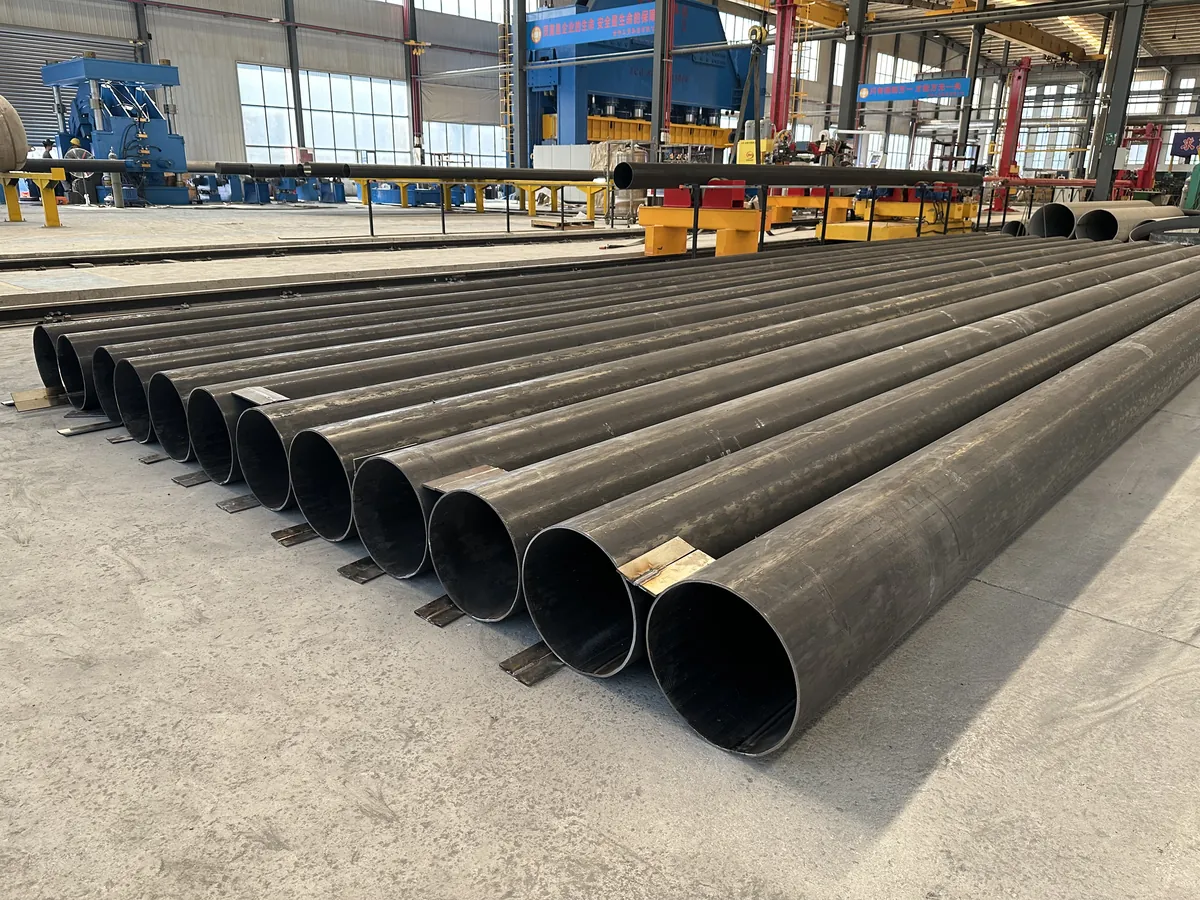
Table of Contents
- How Each Pipe Is Made
- Size and Wall-Thickness Range
- Strength and Performance
- Inspection and Quality Control
- Cost Considerations
- How to Choose
- Frequently Asked Questions
How Each Pipe Is Made
Seamless pipe is produced from a solid billet that is heated and pierced or extruded to form a hollow tube with no longitudinal weld. Welded pipe is formed from a rolled or slit strip/coil, or from pressed plate, into a round profile, then the edges are joined by a weld. The weld can run along a straight (longitudinal) line or follow a spiral (helical) line, and the process is named accordingly: electric resistance welded (ERW) pipe uses high-frequency resistance welding of strip; electric fusion welded (EFW) pipe uses a fusion arc; submerged arc welded (SAW) pipe is made as longitudinal SAW (LSAW) from plate or spiral SAW (SSAW) from coil. The presence of a weld seam is the defining difference between the two.
Size and Wall-Thickness Range
Welded pipe is generally easier to produce in large diameters and longer lengths, with consistent wall thickness and a smoother outer and inner surface. Size is stated as a nominal pipe size (NPS, or DN in metric) plus a wall designation such as a schedule number (for example Sch 40 or Sch 80), or directly as OD and wall thickness in millimetres. Seamless pipe is commonly associated with thick-wall and high-pressure sizes, while very large diameters in seamless form become harder to produce and less economical. The available size range also depends on the material grade and the mill’s equipment.
Strength and Performance
A correctly welded and inspected pipe can meet the mechanical and pressure requirements of its specification. The longitudinal weld is the critical zone in welded pipe, so weld quality, heat treatment and inspection determine performance. Seamless pipe has no weld seam and is often preferred in codes or services where the absence of a weld is required, especially for very high pressure, extreme temperature or severe cyclic conditions.
Inspection and Quality Control
- Welded pipe: inspection focuses on the weld seam, including ultrasonic or radiographic testing of the weld, dimensional checks, and verification that the weld chemistry matches the base material.
- Seamless pipe: inspection concentrates on the body, including NDT for internal and external defects, wall thickness verification and mechanical testing.
Either type can be supplied with mill test reports and the agreed NDT level; the inspection plan should follow the purchase standard and project specification.
Cost Considerations
Welded pipe is typically more cost-effective for large-diameter, thin-to-medium wall applications and longer lengths, because material use and forming are efficient. Seamless pipe usually carries a higher price, reflecting the piercing/extrusion process and its premium position in high-pressure service. The total installed cost, not just the unit price, should be compared against the service requirements.
How to Choose
Choose welded pipe when the application allows a longitudinal weld, the diameter is large or the project is cost-sensitive, and the specification permits welded construction. Choose seamless pipe when the design code, pressure rating, temperature or service conditions explicitly require a seam-free body, or when the project engineer specifies it. When in doubt, provide the fluid, pressure, temperature, diameter and applicable standard, and ask the supplier to confirm the accepted pipe type.
Frequently Asked Questions
Is welded pipe weaker than seamless?
A qualified, inspected weld does not make the pipe weaker than its specification. The weld is the zone that receives the most inspection; performance depends on the WPS, NDT and heat treatment rather than on the pipe being seamless by itself.
Which pipe type is better for large diameters?
For large-diameter line and process pipe, welded construction is usually more readily available and economical. Seamless remains the choice where the specification requires it, but availability and price should be confirmed for the exact size.
Which is better: welded or seamless stainless steel pipe?
There is no universal winner between welded and seamless stainless steel pipe: welded pipe is usually the better value and choice for large-diameter, general and MEP services, while seamless is preferred where codes require a seam-free body for high pressure, extreme temperature or severe cyclic service. Match the pipe type to the service, pressure, temperature and applicable standard rather than choosing one by default.
How do I choose between ERW, SAW and EFW welded pipe?
The choice follows the size, wall and service: ERW (high-frequency straight-seam) pipe is economical for small-to-medium, smooth-wall lines; SAW pipe, including LSAW from plate and SSAW from coil, suits large, thick-wall, high-pressure transmission; EFW pipe provides deep fusion welds for large-diameter austenitic and alloy lines and is often specified to standards such as ASTM A358. Confirm the weld process, inspection level and standard on the enquiry rather than selecting by abbreviation alone.
Conclusion
Seamless and welded pipe each have their place: welded pipe offers availability, consistency and value for many large-diameter and general services, while seamless meets the strictest high-pressure and seam-free requirements. Share your project conditions with Shiwang Pipe, and we will help you select the pipe type, grade and specification that fit the job.