

Bimetallic clad steel pipe combines the mechanical strength and pressure-bearing capacity of a carbon or low-alloy steel backing with a thin corrosion-resistant liner of stainless steel, nickel alloy or other cladding material. Instead of building the whole pipe from an expensive alloy, the cladding carries the corrosion load while the backing carries the structural load, giving a cost-effective solution for corrosive process lines.
This guide explains how clad pipe is constructed, where it is used, and the points buyers should confirm when sourcing clad welded pipe for export.
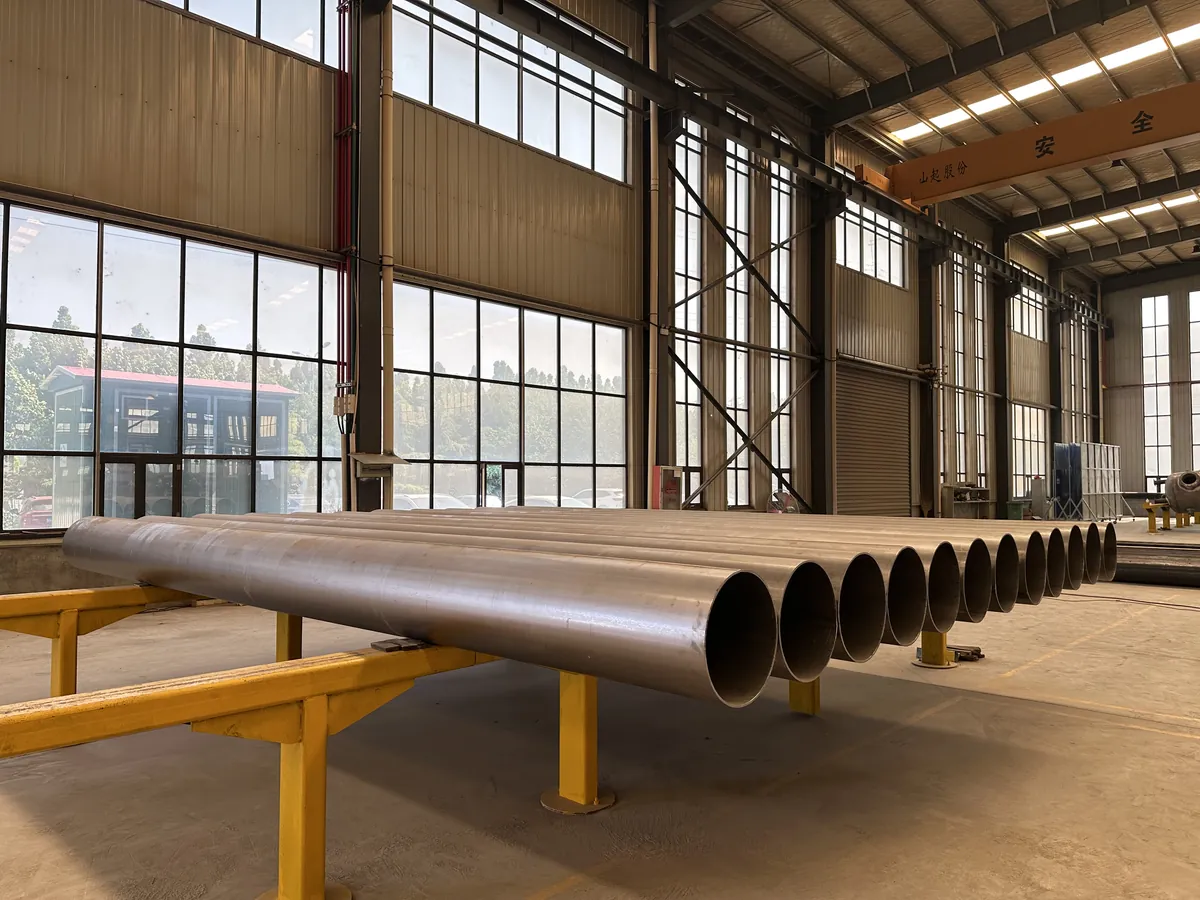
Table of Contents
- What Is Bimetallic Clad Pipe?
- How Clad Pipe Is Constructed
- Why Choose Clad Pipe
- Common Applications
- Selection and Inspection Points
- Frequently Asked Questions
What Is Bimetallic Clad Pipe?
A clad pipe consists of two metallurgically bonded layers: a load-bearing backing layer, usually carbon steel or low-alloy steel, and a relatively thin cladding layer on the inside that contacts the process fluid. The liner may be 304/316L stainless, a duplex grade, a nickel-based alloy, titanium or another corrosion-resistant material selected for the service environment. The two layers must remain bonded along the pipe length so that the liner does not delaminate under pressure, temperature cycling or bending.
How Clad Pipe Is Constructed
Common production routes include roll-bonded or explosively bonded clad plate that is then formed and welded into pipe, as well as lined pipe where a corrosion-resistant liner is inserted and bonded to the backing. For welded clad pipe, the longitudinal seam and any girth welds require a qualified welding procedure that deposits corrosion-resistant filler on the liner side, matching the cladding chemistry and avoiding iron contamination of the alloy layer.
Why Choose Clad Pipe
- Cost efficiency: only the inner layer uses the expensive alloy, while the backing uses lower-cost structural steel.
- Strength and toughness: the carbon backing provides the pressure and mechanical strength required by the design code.
- Corrosion protection: the liner protects the backing from the corrosive fluid without the full cost of a solid-alloy pipe.
- Weight and economy: compared with a thick solid-alloy wall, a clad section can be lighter and more economical for large-diameter process lines.
Common Applications
Clad pipe is widely used in oil and gas gathering and transmission, refinery and petrochemical process lines, seawater and brine service, desalination, chemical fertilizer, power plant condensate and water treatment, and any line where the fluid is corrosive but the pipeline must still carry pressure and external loads.
Selection and Inspection Points
When specifying clad pipe, confirm the backing grade and thickness, the liner grade and liner thickness, the bonding method, the welding procedure and the required non-destructive testing. Buyers commonly ask for ultrasonic testing to check liner bonding, visual and dimensional inspection, and mill test reports that list both backing and liner chemistry. The cladding combination should be matched to the fluid, temperature and design pressure rather than chosen by grade name alone.
Frequently Asked Questions
Can the liner of a clad pipe delaminate?
When the bonding process is qualified and the pipe is handled and welded within the approved procedure, the liner stays bonded. Delamination risk rises from poor bonding, excessive forming strain or improper welding, which is why bonding inspection and a qualified WPS are important.
Is clad pipe cheaper than a solid alloy pipe?
In most large-diameter or high-volume corrosive service, clad pipe is more economical because only a thin liner uses the costly alloy. The comparison still depends on size, liner grade, quantity and the inspection level required.
Conclusion
Bimetallic clad welded pipe delivers corrosion resistance where it is needed most and structural strength where it matters most, making it a practical choice for demanding process and pipeline projects. Send us your backing and liner grades, diameter, wall and inspection standard through the contact page, and Shiwang Pipe will advise on a suitable clad pipe configuration.