

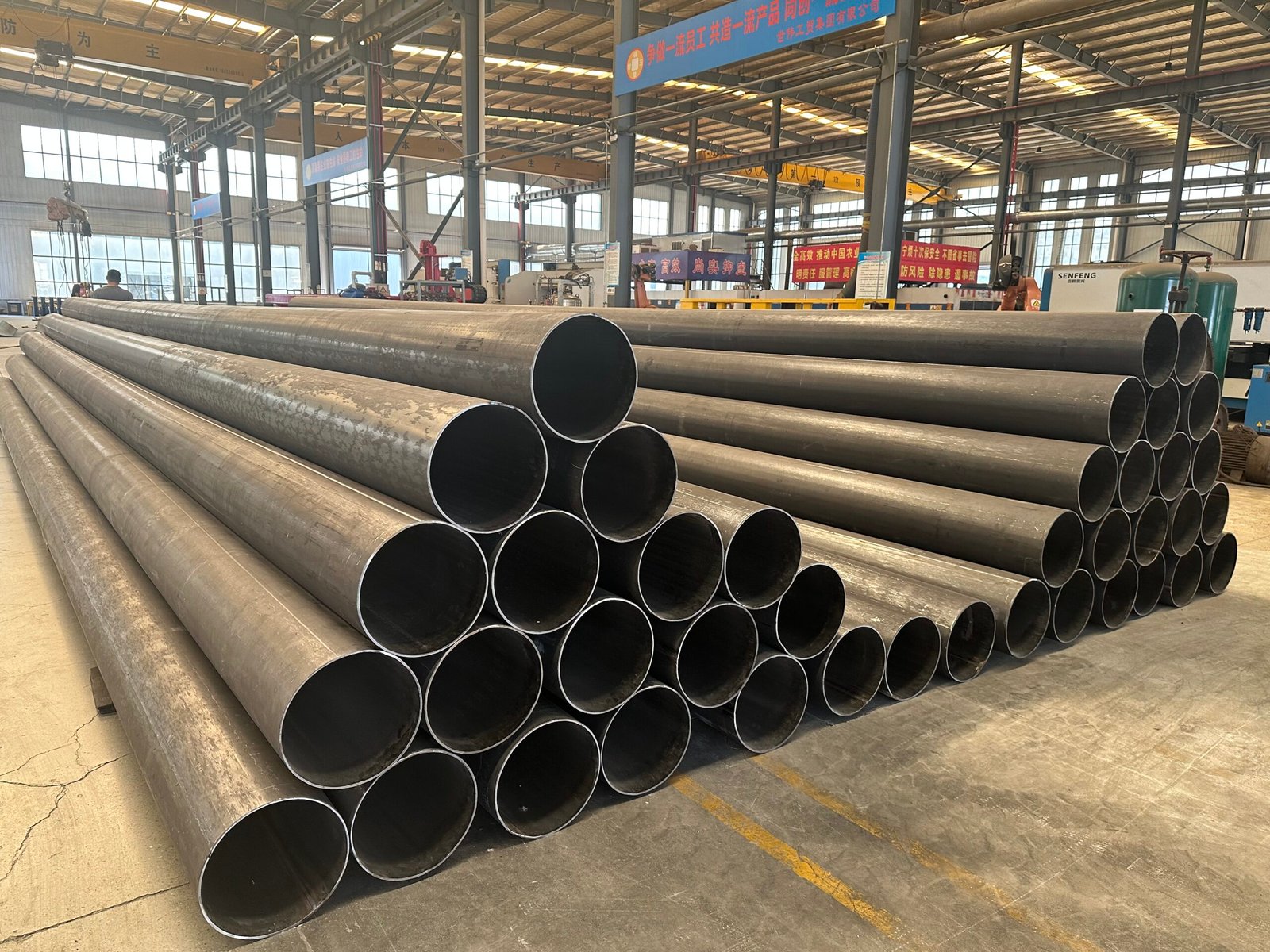
In the current era of rapid development in multiple fields such as industrial manufacturing, construction engineering, food and pharmaceutical industries, the performance compatibility and safety reliability of pipeline materials have become the focus of industry attention. Stainless steel pipes, with their inherent diverse core advantages, have broken through the limitations of traditional pipe materials and demonstrated strong adaptability in various harsh working conditions. They are gradually becoming the preferred solution in the pipeline field and leading the industry towards higher quality and sustainability.
Outstanding corrosion resistance, constructing a protective barrier in extreme environments. The core competitiveness of stainless steel pipes stems from the dense chromium oxide passivation film formed on their surface. This natural “protective suit” can effectively prevent the erosion of moisture, acidic and alkaline media, chloride ions, etc., fundamentally solving the pain points of traditional pipe materials such as easy rusting and easy leakage. Whether in the chemical industry for transporting strong corrosive chemical media, or in marine engineering to resist long-term erosion by tidal salt fog, or in municipal water supply systems to cope with complex water quality environments, stainless steel pipes can maintain structural integrity and significantly extend their service life. Data shows that in the same harsh environment, the service life of stainless steel pipes is 5-8 times longer than that of ordinary carbon steel pipes, significantly reducing the overall cost of pipeline replacement and maintenance.
The performance is stable across the entire temperature range and can meet the requirements of various working conditions. Unlike most pipes that tend to deform and lose performance under extreme temperatures, stainless steel pipes have excellent adaptability to both high and low temperatures. In high-temperature scenarios, they can maintain good mechanical strength and corrosion resistance within the temperature range of 300°C to 800°C, perfectly adapting to high-temperature operation environments such as petroleum refining and boiler heat exchange; in low-temperature scenarios, austenitic stainless steel pipes can maintain toughness even at ultra-low temperatures of -270°C, without undergoing brittle transformation, and can meet special requirements such as cold chain logistics and low-temperature fluid transportation. This all-temperature stability performance enables stainless steel pipes to cover all scenarios from industrial high-temperature workshops to polar cold chain storage.
It combines high strength with lightweight, optimizing the installation and usage experience. The stainless steel pipe, while having high tensile strength and compressive strength, also has a relatively light weight, achieving a perfect balance between “strong bearing capacity” and “easy installation”. Its yield strength can reach above 205 MPa, which can easily withstand the pressure requirements of high-pressure fluid transportation. It performs outstandingly in scenarios with extremely high requirements for pipe strength, such as water supply and fire protection systems in high-rise buildings. The lightweight feature significantly reduces transportation and installation costs. Combined with various connection methods such as compression and welding, it can significantly improve construction efficiency, especially suitable for pipeline laying projects in complex layouts such as super high-rise buildings and large industrial zones.
The hygiene and safety attributes are outstanding, meeting the strict standards of the high-end sector. The stainless steel pipe material is non-toxic and harmless, with a smooth surface free of pores. It not only prevents the release of heavy metals that cause medium contamination, but also inhibits the attachment and reproduction of bacteria and microorganisms, perfectly meeting the strict hygiene and safety requirements of the food and medicine industries. In industries such as dairy product processing, beverage production, and pharmaceutical manufacturing, the stainless steel pipe can be directly used for raw material transportation and aseptic production processes, complying with domestic and international food contact material safety standards such as GB 4806.9 and FDA; in medical scenarios such as hospital operating rooms and blood dialysis centers, its hygiene characteristics can effectively reduce the risk of cross-infection and safeguard medical safety.
The green sustainability advantages are remarkable and align with the trend of environmental protection. Under the leadership of the “dual carbon” goals, the environmental attributes of stainless steel pipes have become increasingly prominent. They can be 100% recycled and reused, and the recycling process does not produce harmful pollutants. After recycling, the material properties do not deteriorate, and they can be re-invested in the production cycle, significantly reducing resource waste. At the same time, the production process of stainless steel pipes does not require the addition of harmful substances, and the energy consumption is only 1/3 of that of plastic pipes. It achieves low pollution and low energy consumption in the entire life cycle, realizing the requirements of green development with low pollution and low energy consumption. In addition, the inner wall of the stainless steel pipe is smooth and does not accumulate dirt easily, which can reduce the resistance of fluid transportation and lower energy consumption, further enhancing the environmental benefits.
From the core transmission lines in industrial production to the safety guarantee networks for daily life projects, stainless steel pipes, with their multi-dimensional advantages such as corrosion resistance, high temperature resistance, high strength, hygiene and environmental friendliness, continue to provide reliable pipeline solutions for various industries. With the continuous upgrading of technology, the processing techniques of stainless steel pipes will become more precise, and their application scenarios will be further expanded. They are expected to demonstrate greater value in high-end fields such as new energy and aerospace, injecting continuous impetus for the high-quality development of the industry.