

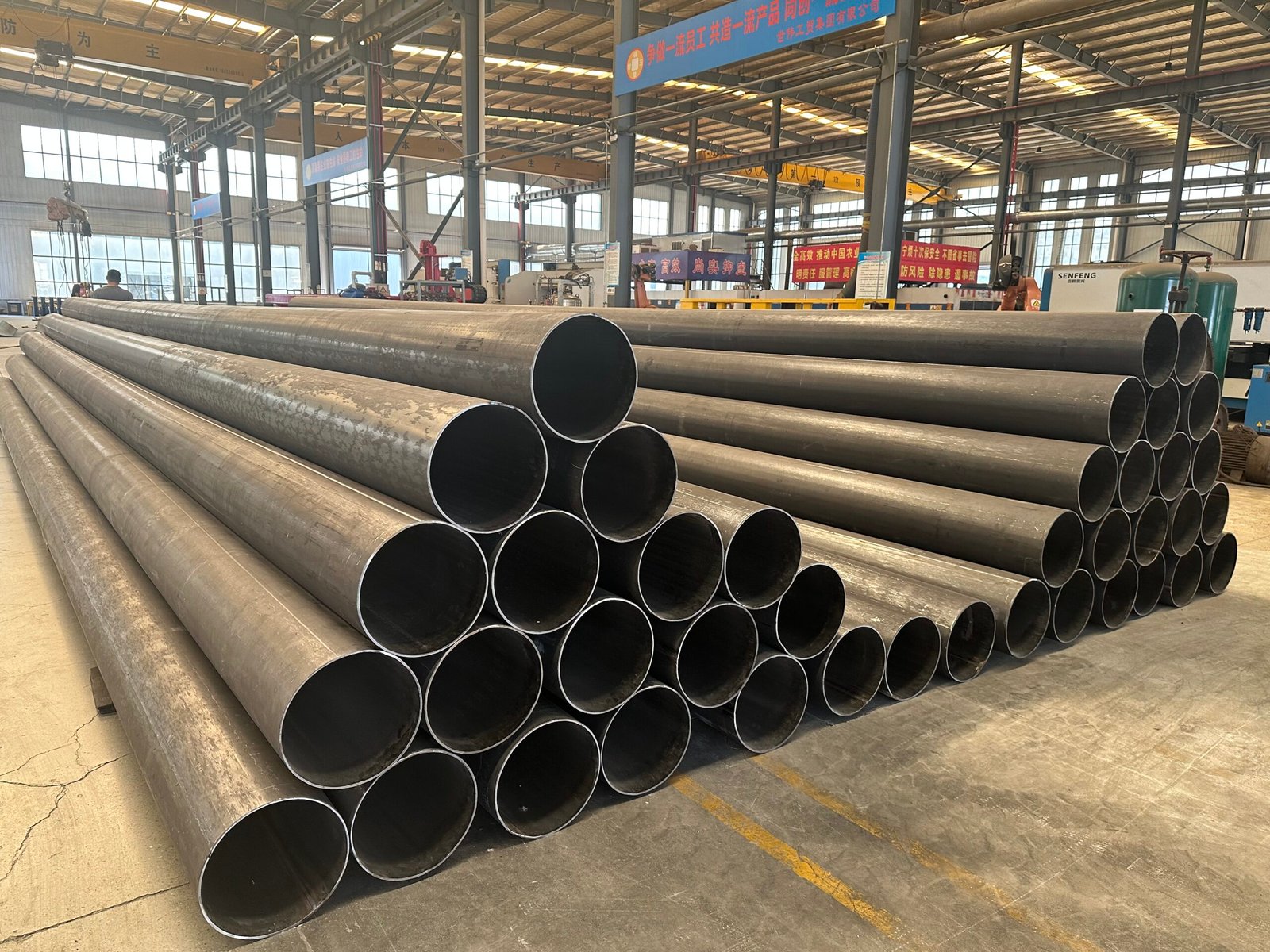
During the rapid development of industries such as petrochemicals, power transmission, and construction infrastructure, the performance and cost-effectiveness of pipes directly affect the quality of construction and operational efficiency. As a basic material with multiple advantages including high strength, wide adaptability, and economicity, carbon steel pipes have continuously become the preferred pipes for various industries, providing a solid foundation for industrial upgrading.
Superior mechanical properties form the safety defense line, which is one of the core competencies of carbon steel pipes. Relying on high-quality carbon steel substrates and precise manufacturing processes, carbon steel pipes possess excellent strength and compressive resistance, capable of easily withstanding mechanical loads in high-pressure and high-temperature environments. Especially, seamless carbon steel pipes, due to their absence of welding joint defects and uniform material distribution, perform outstandingly in high-pressure applications such as boiler pipes and hydraulic systems, effectively reducing the risks of pipe deformation and rupture. At the same time, carbon steel pipes also have good toughness and fatigue resistance, which can absorb energy through their own characteristics when facing complex conditions such as vibration, impact, and temperature changes, avoiding brittle fracture and ensuring the long-term stable operation of the pipeline system. This advantage makes them indispensable in scenarios with extremely high safety requirements, such as bridge structures and vehicle manufacturing.
Flexible processing and wide adaptability enable carbon steel pipes to precisely meet the diverse demands of various industries. Carbon steel pipes can be adjusted in size and mechanical properties through various processes such as hot rolling and cold drawing. They can be customized for production ranging from small diameters to extremely large diameters, and from ordinary pressure grades to high-pressure grades, to meet the design requirements of different projects. Their excellent welding performance significantly reduces the construction difficulty. They can be efficiently connected through various methods such as manual arc welding and gas protection welding. The welding joints have high strength and good sealing performance, and are suitable for complex on-site installation environments. Moreover, through anti-corrosion treatments such as galvanization and epoxy coating, the corrosion resistance of carbon steel pipes can be further enhanced. They can adapt to harsh environments such as chemical acid and alkali media and underground laying, extending their service life to several decades and significantly expanding their application boundaries in fields such as sewage treatment and marine engineering.
High cost-effectiveness and green sustainability features provide a new path for enterprises to reduce costs and increase efficiency. Compared with stainless steel, alloy steel and other pipe materials, carbon steel has lower raw material costs. Moreover, its mature processing technology and high production efficiency can significantly reduce the initial procurement and construction costs of the project. From a full life cycle perspective, carbon steel, due to its excellent wear resistance, can reduce maintenance frequency and replacement costs, and has outstanding cost advantages in the long term. At the same time, carbon steel materials can be recycled and reused, and the production process has lower energy consumption, with carbon emissions being only 30% of those of some metal pipe materials. This aligns with the current trends of green buildings and sustainable development, making it an ideal material choice for enterprises to implement environmental protection concepts.
At present, carbon steel pipes have been widely used in various fields such as oil and gas transportation, urban water supply and drainage, power engineering, metallurgy and mining. Their stable performance and diverse advantages are continuously enabling the high-quality development of various industries. With the continuous upgrading of manufacturing processes, the performance of carbon steel pipes in terms of corrosion prevention and precision will further improve. In the future, they are expected to play a greater role in more high-end industrial scenarios.