

Stainless steel welded pipe is a standard material in chemical and process plants, where lines carry acids, alkalis, solvents, cooling water, steam and intermediate products. The right stainless grade resists the process fluid, maintains integrity at operating temperature, and can be welded and inspected to the plant’s specification.
This guide looks at why stainless pipe is chosen for process service, the grades commonly used, the corrosion factors that govern grade selection, and the inspection points relevant to chemical plant pipework.
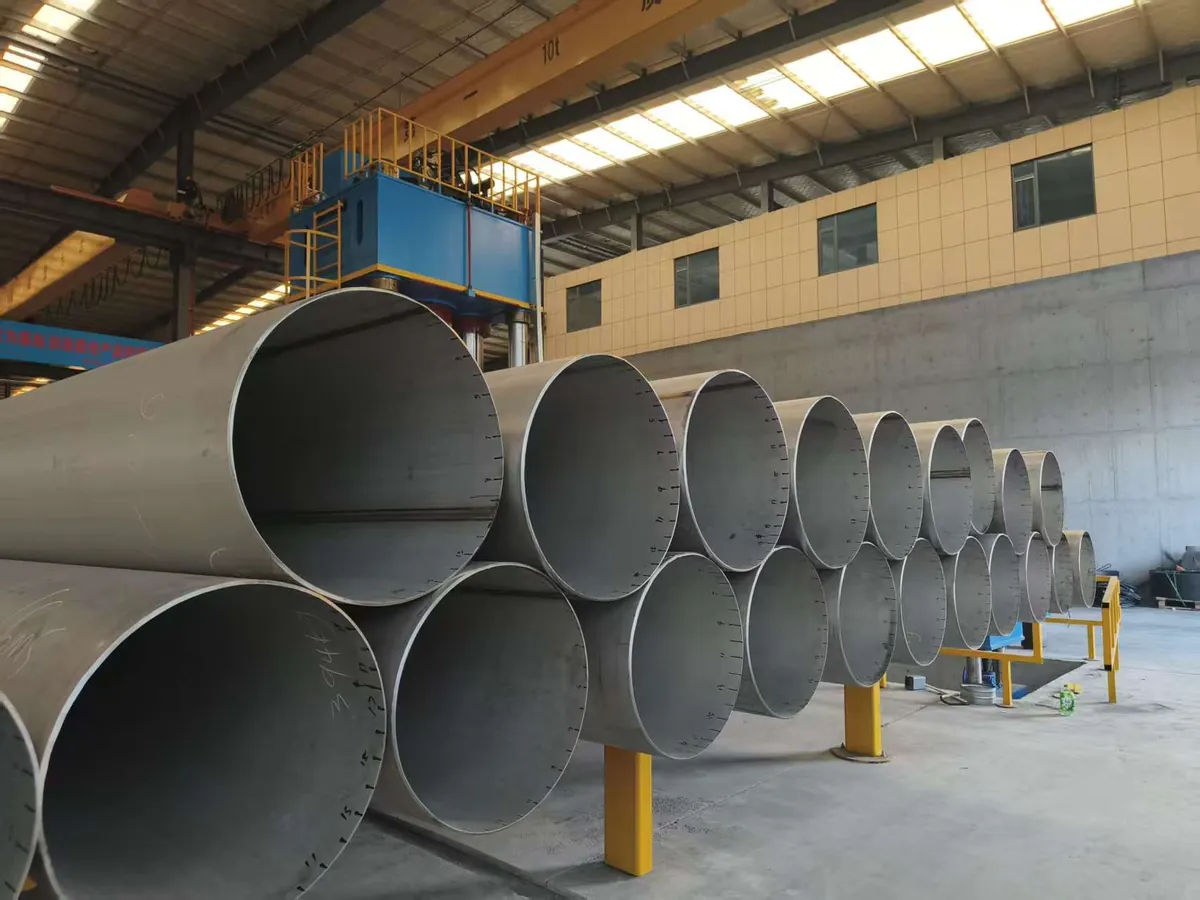
Table of Contents
- Why Stainless Pipe for Process Plants
- Common Stainless Grades
- Corrosion Factors to Consider
- Welding and Surface Considerations
- Inspection and Documentation
- Frequently Asked Questions
Why Stainless Pipe for Process Plants
Process piping must resist attack from the carried fluid, withstand operating temperature and pressure, and remain clean enough for the product or process. Stainless steel offers good general corrosion resistance, strength at moderate temperatures, ease of welding and fabrication, and a surface that can be cleaned or passivated for hygienic or corrosive duty. Welded stainless pipe provides an economical way to supply the diameters and lengths required for plant pipework.
Common Stainless Grades
- 304/304L: general-purpose austenitic stainless for mild corrosive service, water, air and many organic process fluids.
- 316/316L: molybdenum-bearing grade with better pitting and chloride resistance than 304, widely used in chemical and marine-related service.
- Duplex and super duplex: higher strength and chloride resistance for more severe corrosive conditions.
- Special alloy grades: selected for aggressive acids or high-temperature service where standard austenitic grades are insufficient.
These grades are commonly ordered as welded pipe to ASTM A312, which covers straight-seam welded austenitic pipe, or to ASTM A358 for electric-fusion-welded (EFW) austenitic pipe in larger sizes, with EN 10217-7 used for European pressure duty. Sizes are given as NPS/DN with a schedule number (such as Sch 10S or Sch 40S) or as direct OD and wall thickness.
Corrosion Factors to Consider
Grade selection should consider the fluid chemistry, chloride concentration, operating temperature, pH, presence of sulphides or oxidising agents, and the risk of pitting, crevice corrosion, stress corrosion cracking or intergranular attack. A grade that works at room temperature may fail at elevated temperature or in concentrated chloride service, so the process data should be reviewed before choosing the stainless grade.
Welding and Surface Considerations
Process pipe welds should follow a qualified welding procedure, with weld chemistry matched to the base material and proper shielding to avoid chromium depletion. Heat tint and weld contamination are commonly removed by pickling and passivation, especially on corrosive or hygienic lines. The internal surface condition matters where the fluid could deposit solids or where cleanability is required.
Inspection and Documentation
Chemical plant orders commonly require mill test reports with chemistry and mechanical results, weld NDT to the agreed level, dimensional inspection, and the certificate type specified by the project. For code-driven or audited plants, additional third-party inspection or a 3.2 document may be requested. These requirements should be listed at order stage so the pipe can be produced and inspected accordingly.
Frequently Asked Questions
Is 316L always the right grade for chemical service?
316L is a common choice for many corrosive fluids, but severe chloride, acid or high-temperature service may require duplex, super duplex or a special alloy. The grade should be matched to the actual process data rather than defaulting to 316L.
Can welded stainless pipe be used in pressure process lines?
Yes, when the pipe is produced and inspected to the applicable standard and the design code permits welded construction. The weld inspection, heat treatment and certificate should follow the project specification.
Should I specify ASTM A312 or ASTM A358 for process pipe?
ASTM A312 welded pipe suits general and high-temperature austenitic lines in the common straight-seam size range, while ASTM A358 covers electric-fusion-welded pipe for larger diameters and defines radiographic testing classes, including full or partial examination of the weld. Name the standard and the weld inspection class on the enquiry, along with the grade, NPS/DN, schedule and length.
Conclusion
Stainless welded pipe supports a wide range of chemical and process applications, with grade, finish and inspection matched to the fluid and conditions. Describe your process fluid, temperature, pressure and required standard to Shiwang Pipe, and we will help select a suitable stainless welded pipe configuration.